

Textural relief
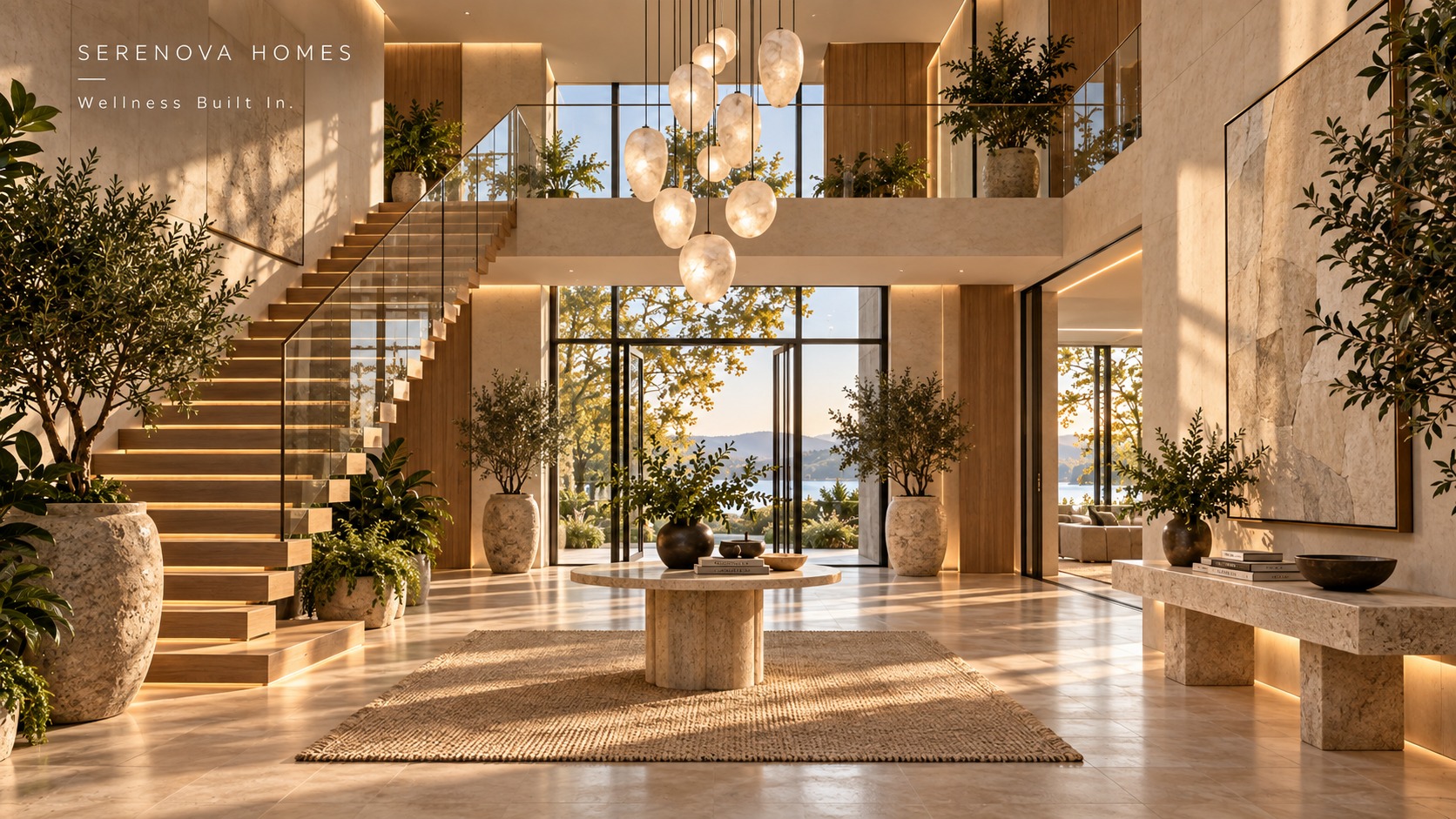
Entry hall statement piece
Home / Design gallery / Interior design
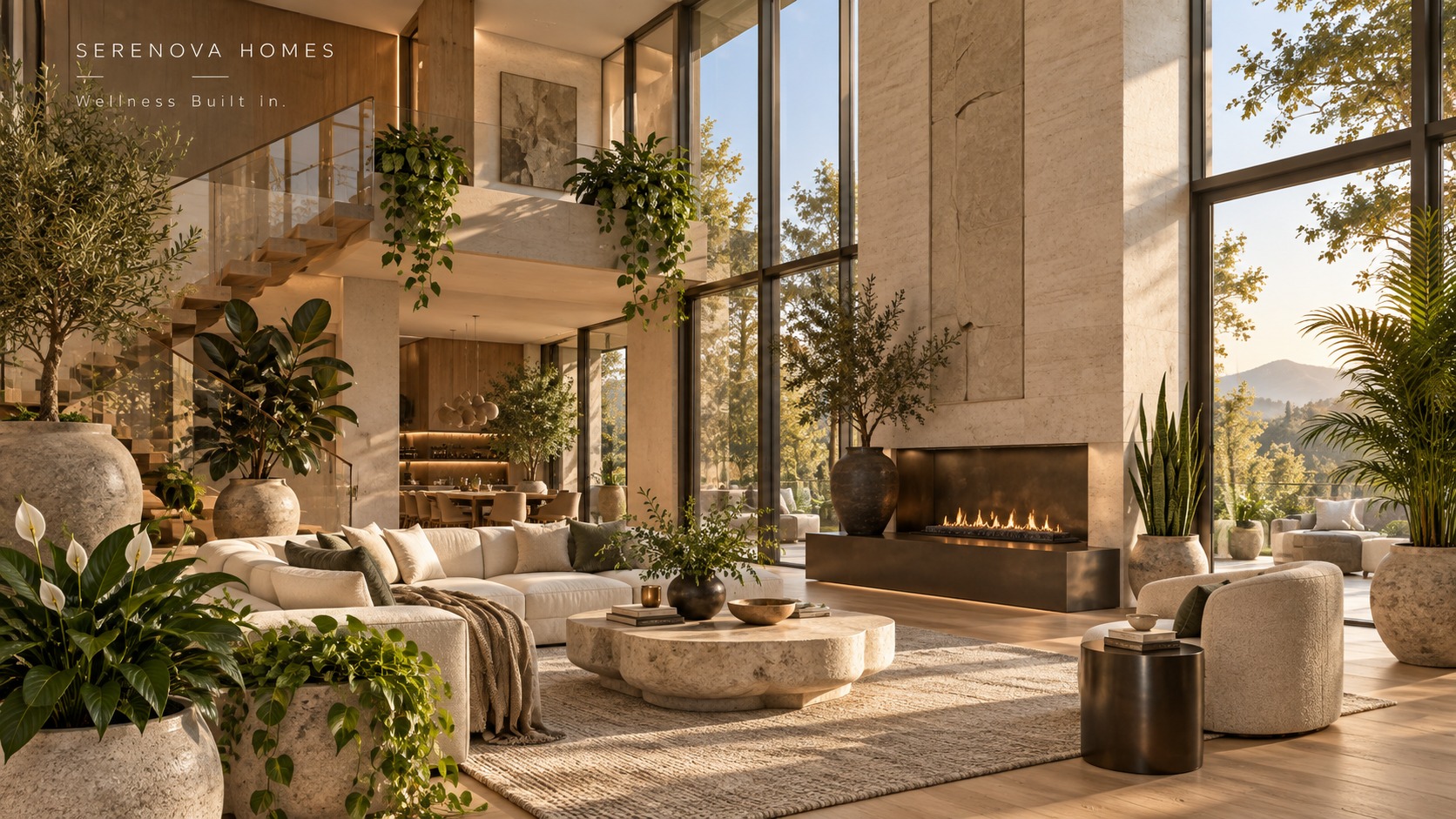
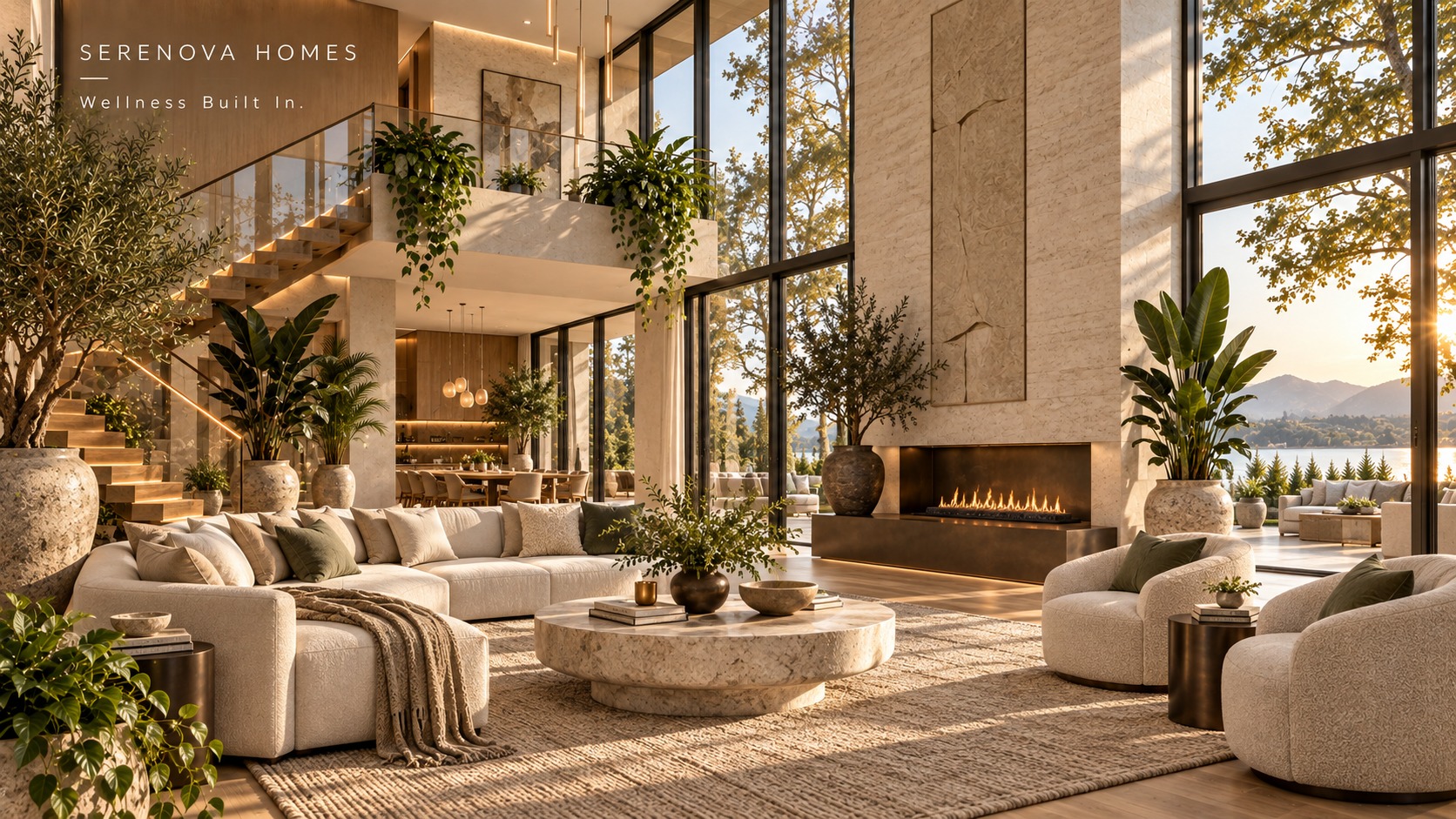
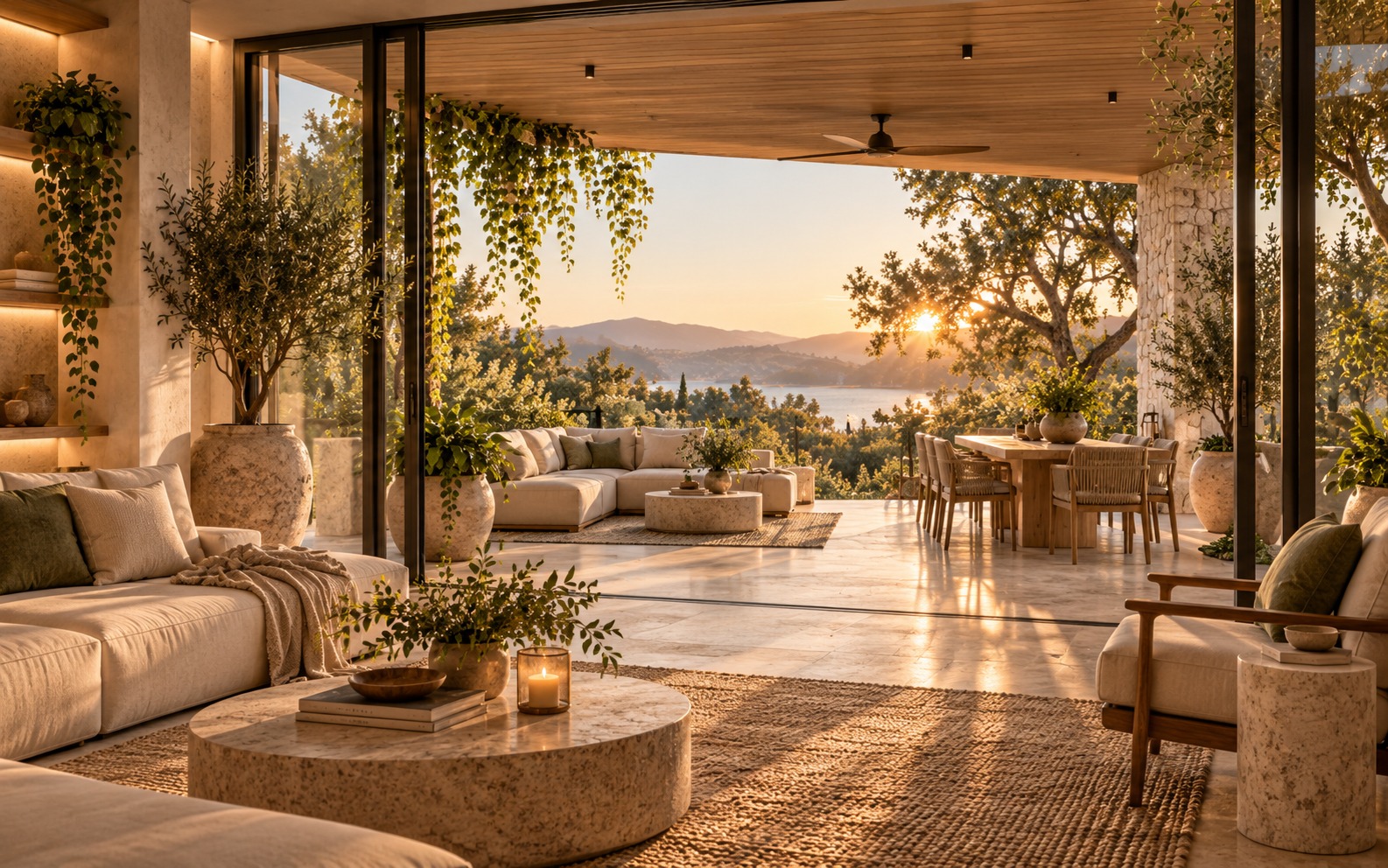
Natural stone, warm wood, and real plants — not as decoration, but as part of how the home feels and functions. Every Serenova interior is designed around genuine biophilic principles: material warmth, daylight, and greenery woven through the architecture rather than added afterward.
Biophilic by design
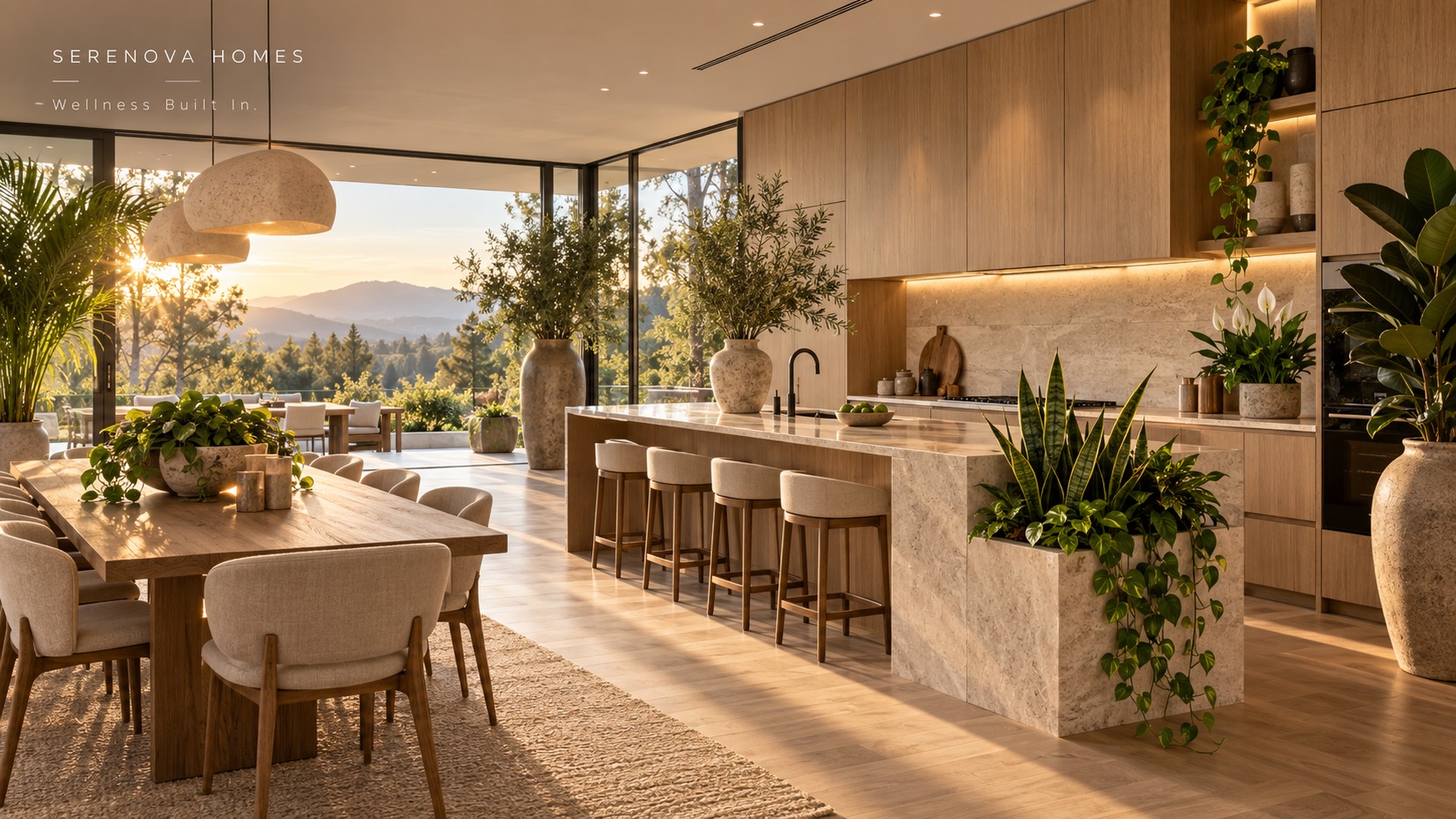
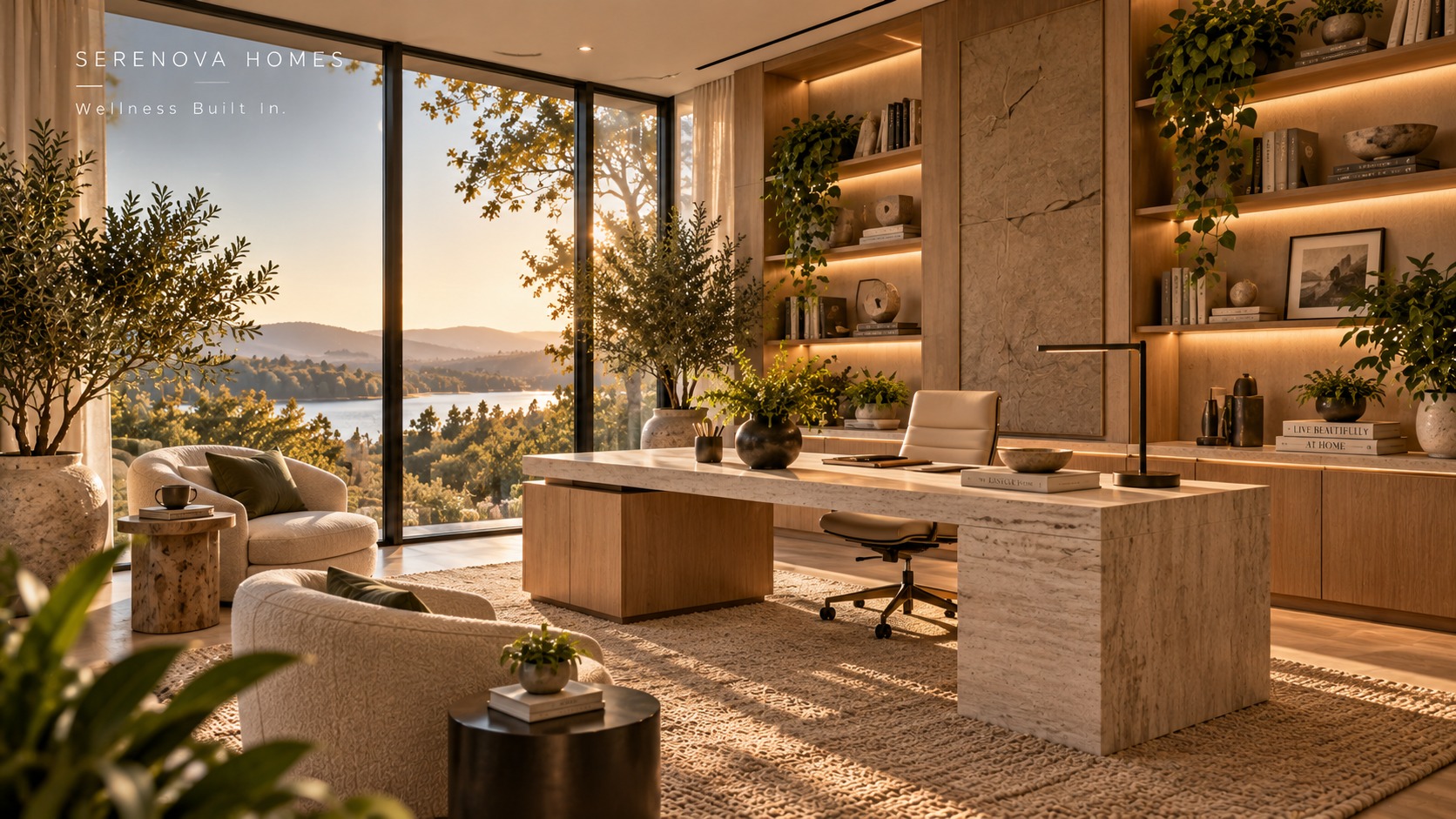
Large planters, living walls, and greenery placed at the scale of the room — not an afterthought on a windowsill. Serenova interiors treat plants as a structural material, the same way we treat stone or wood, chosen for how they shape light, texture and the feel of a space.
Real plants, not artificial — because the goal is a living interior, not a styled one.
What plants actually do
Plants are one of the most over-claimed features in wellness design. We'd rather be accurate about what the research actually supports.
Plants release moisture through transpiration, gently raising indoor humidity. Larger installations — living walls, dense plantings — can measurably improve comfort and even help a space feel cooler.
The idea that a few houseplants "clean the air" traces to a 1989 NASA study run in sealed chambers — conditions nothing like a normally ventilated home. In real homes, plants' effect on air quality is modest.
Research since the original NASA study has found that meaningfully reducing airborne VOCs with houseplants alone would take somewhere between 100 and 1,000 plants per 100 square metres — far more than any home reasonably holds. What plants reliably deliver instead: better humidity balance, a genuine boost to psychological wellbeing, and a small, real contribution to CO₂ cycling. That's why Serenova pairs generous, real greenery with an actual engineered air system — fresh-air ventilation, filtration and monitoring — rather than asking plants to do a job they can't do alone.
Natural materials, warm palette
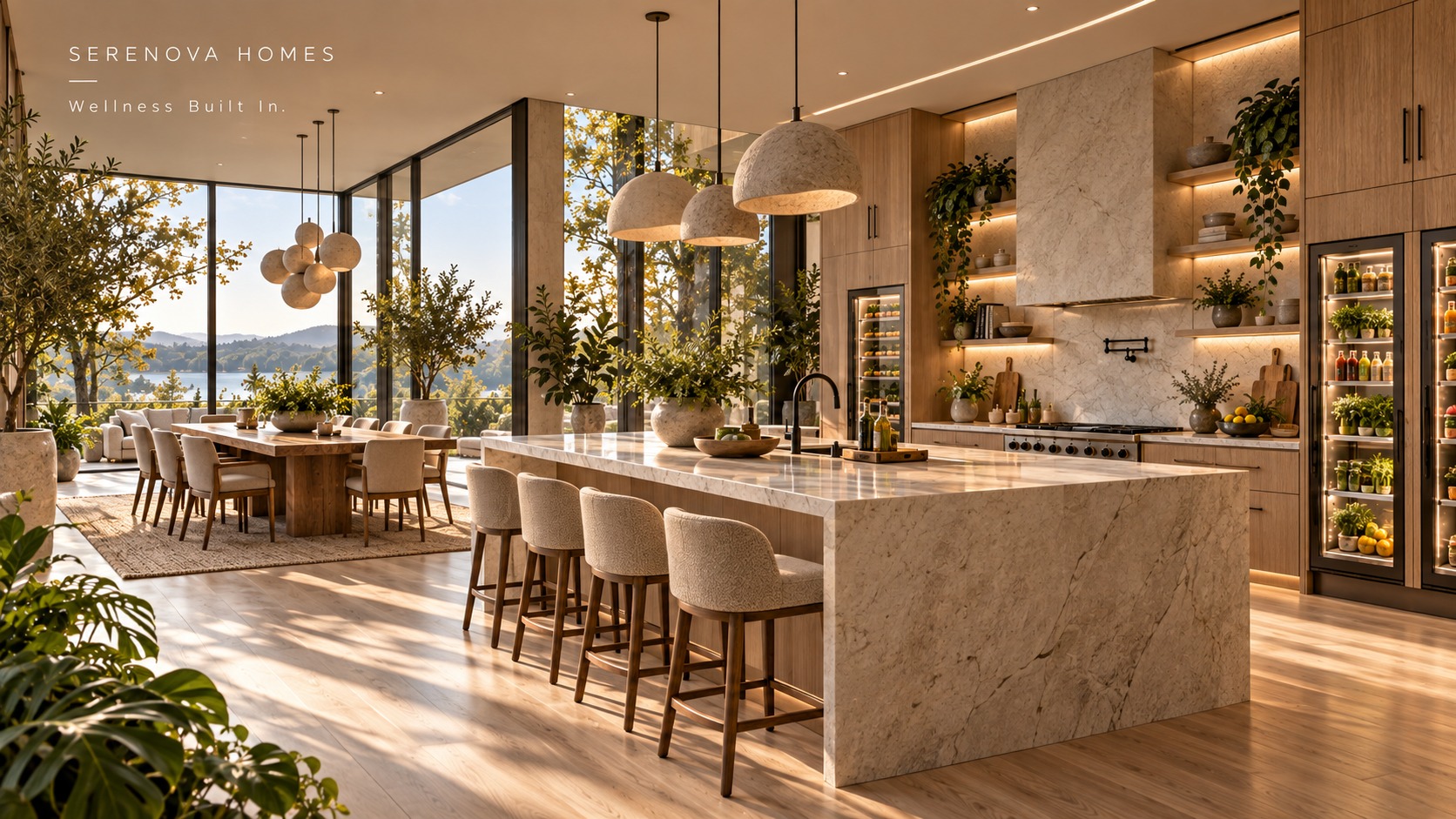
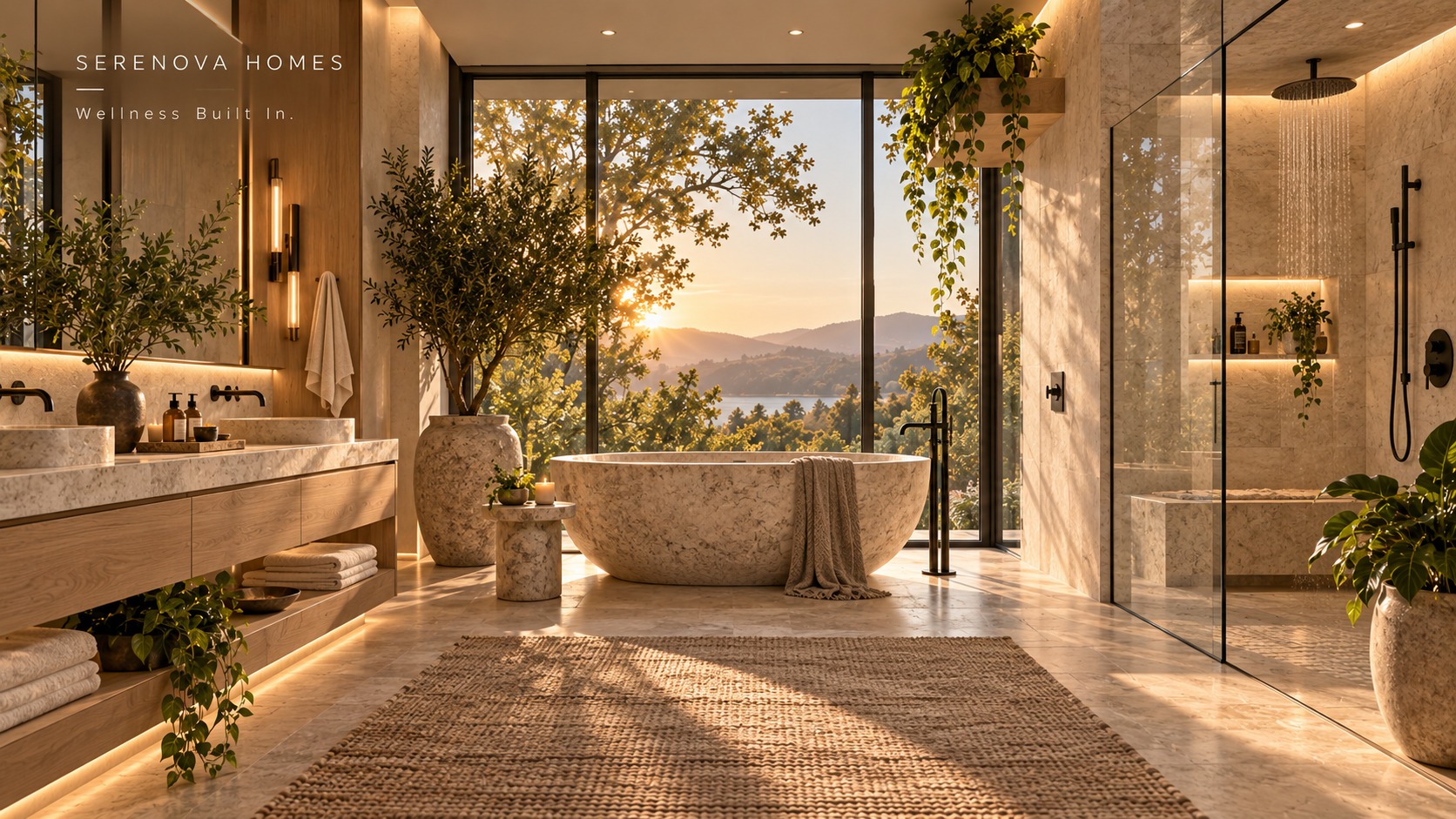
Every interior surface is chosen for warmth as much as performance — natural stone counters and floors, warm oak and walnut cabinetry, linen and wool textiles. Nothing reads as cold or clinical, even where the materials themselves are hard-wearing and low-emission.
Full-height glazing keeps the interior connected to the landscape outside, so the greenery indoors feels like a continuation of the view, not a substitute for it.
Color, furniture & art
A wellness home doesn't stop at the architecture. What fills a room — its color, its furniture, the art on its walls — shapes how a space feels just as much as the materials it's built from.
Serenova interiors work from a restrained, warm neutral palette — sand, stone, oat, walnut — with muted greens and deep charcoals used sparingly as grounding accents. Color is chosen the way light is: to support rest and focus rather than to demand attention.
High-contrast or saturated color is used deliberately and rarely, so a room never fights with the calm the rest of the home is designed to create.
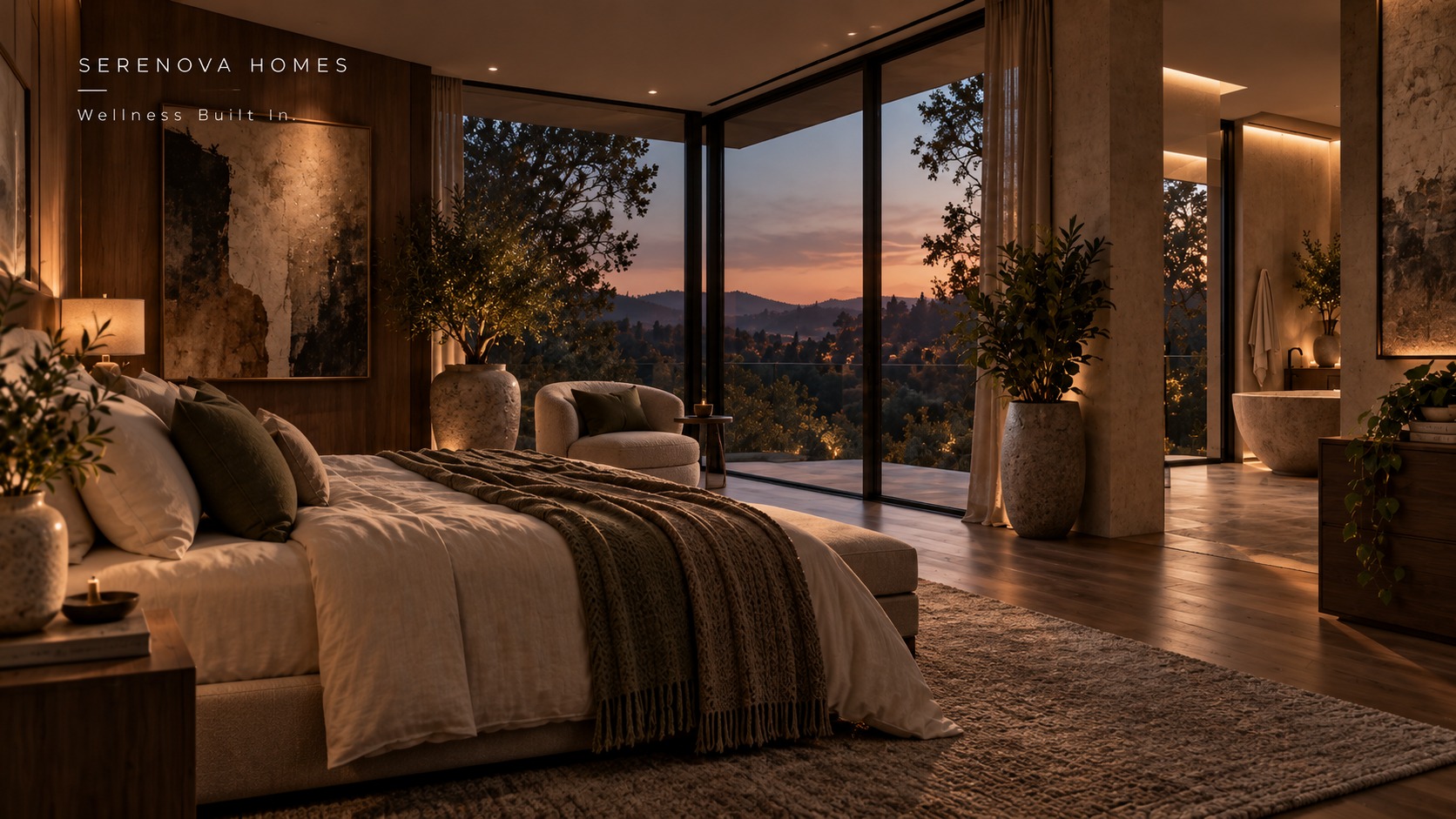
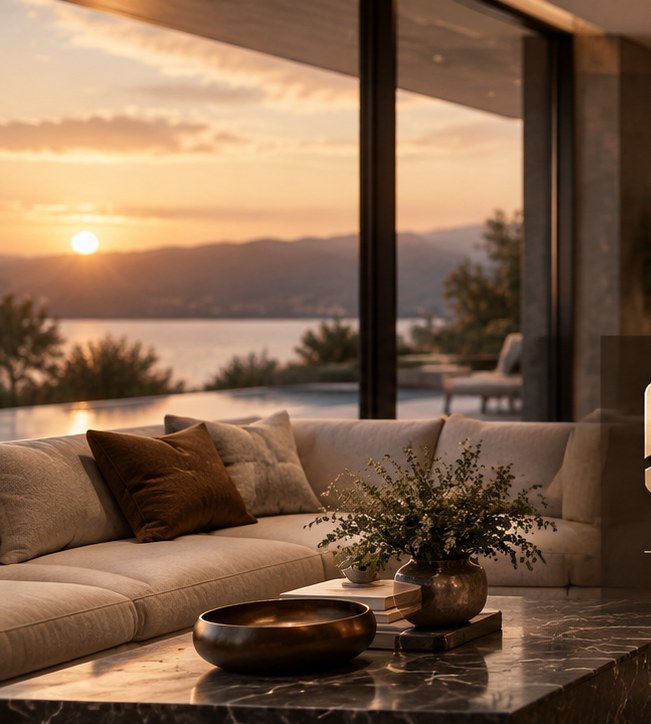
Rounded, low-profile forms in boucle, linen and leather soften every room and invite the body to actually rest in it — not just look good in photographs. Pieces are selected for comfort and longevity first, so a room still feels right after years of daily use.
Natural stone and solid wood furniture — coffee tables, consoles, dining tables — carry the same material language as the architecture, so nothing feels like an afterthought dropped into a finished shell.
Large-scale, abstract and textural artwork is used deliberately — as a counterpoint to the calm of the architecture, not a distraction from it. A single considered piece does more for a room than a wall of smaller ones.
Where possible, art is placed to be seen from multiple rooms at once, so it anchors a sightline rather than sitting in isolation.
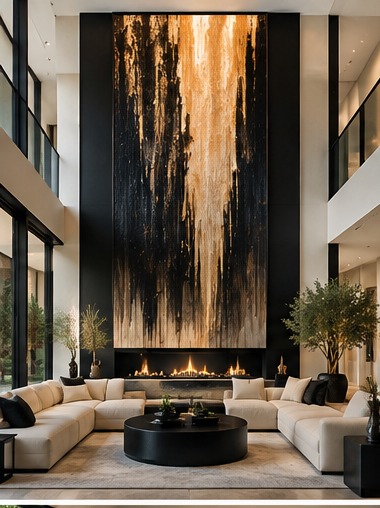
The art gallery
A look at how art, sculpture and statement pieces are placed through a Serenova home — abstract paintings, textural reliefs, bronze figures and considered console styling.
Entry hall statement piece

Lounge focal point

Sculptural entry piece

Stairwell gallery wall

Media room feature

Console styling

Entry bench styling
Style directions
Every Serenova interior starts from the same wellness principles, but not every home should look the same. Here are eight material and furniture directions we design within — each with its own palette, texture and mood.


Color directions
Color sets the tone of a room before anything else does. Here are eight color directions we work within — each restrained, each deliberate, each paired with the materials that carry it through the space.


Where you'll see it
Natural materials, real greenery, and an engineered air system working together — not one standing in for the other.